



Embroidered Bags Motifs Stitching and Everyday Use
An embroidered bag needs to work as a bag as well as display its stitching. The surface motif may attract your attention first, but the opening, lining, straps, and usable interior determine whether it suits the things you carry. Examine those details before choosing by decoration alone.
Also ask how the embroidery was made and what the seller knows about its source. A floral pattern does not prove a particular regional tradition, and an irregular stitch does not establish a named artisan's work. A clear description can make a contemporary machine-embroidered bag appealing without inventing a history for it.
Look Closely at the Motif
Identify what is actually visible: flowers, birds, geometric shapes, lettering, or a combination. If a motif is described as traditional, ask for its named community or design source. Similar forms can occur in more than one setting and need not share one meaning.
Avoid assigning universal messages to every colour or flower. A maker may use a motif decoratively, interpret an inherited pattern, or develop an original design. Those descriptions should remain distinct. Ask for the maker's own explanation where available.
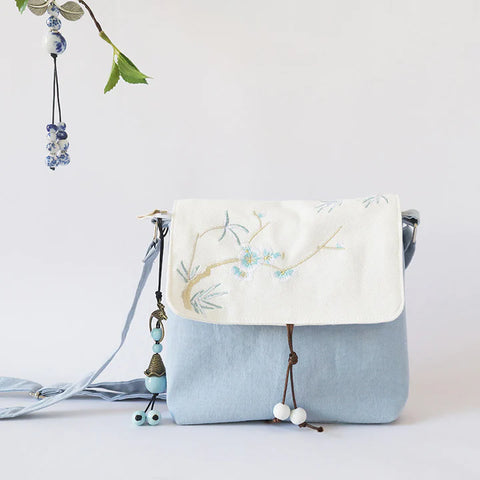
For a gift, consider whether lettering or a religious motif is appropriate for the recipient. Obtain a readable image and translation rather than trusting a short product title. If the source is uncertain, describe the visible design without claiming a cultural identification.
Ask What Hand Embroidered Means
Embroidery may be stitched by hand, by machine, or through a combination of processes. Bag assembly can use a different method from surface decoration. Ask which part the seller calls handmade rather than assuming the term covers every operation.
Machine embroidery is not automatically poor quality, and hand embroidery is not automatically durable. Inspect stitch coverage, attachment, loose loops, and the surrounding fabric. A price comparison should account for the stated work and materials rather than treating one label as a complete quality grade.
Ask whether the photograph shows the exact bag or a representative sample. Handwork and patterned fabric can vary between pieces, but the extent of variation should be explained. Variation is not a reason to ignore a broken stitch, stain, or missing element.
Check the Base Fabric and Thread
Request the base fabric composition, lining material, and embroidery thread information where known. Cotton canvas, silk, synthetic fabric, and mixed constructions can require different care. A smooth shine does not identify silk, and a thick fabric is not necessarily water resistant.
Do not assume cotton canvas is rainproof. If water resistance is claimed, ask what part of the bag it applies to and what evidence supports it. A treated exterior does not automatically protect seams, embroidery, openings, or the lining from water entry.
Likewise, do not make a blanket claim that all silk thread reacts the same way to washing or light. Dye, condition, finish, and the surrounding construction matter. Obtain instructions for the actual bag rather than transferring a rule from a different textile.
Inspect Stitching and Backing
Look for close photographs of raised work, long exposed threads, and areas near folds. Long loops or projecting embellishments can catch on jewelry or rough clothing. Choose a surface compatible with your routine if the bag will rub against a coat or commute beside other objects.
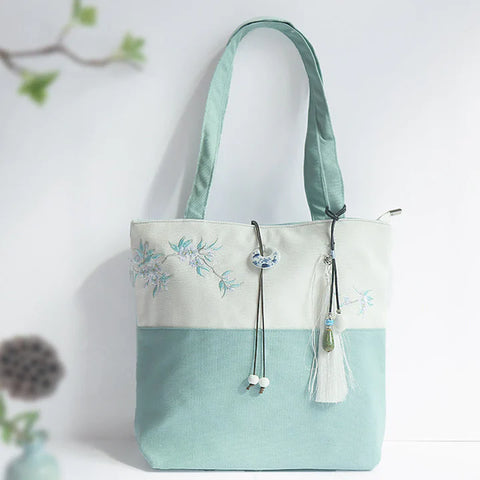
Check whether the reverse of the embroidery is covered or backed. A lining may protect thread ends from keys and other contents, but it does not prove the stitches are securely finished. Ask how the decorated panel is attached to the rest of the bag.
Do not pull a loose thread to test it. Photograph the area and ask whether it is a removable finishing tail or a structural stitch. Cutting an unidentified thread can release nearby work. Repair guidance should refer to the stitch and fabric involved.
Measure Usable Space and the Opening
Ask for external dimensions and the dimensions of the usable opening. A broad pouch can still have a narrow mouth. A phone, notebook, or glasses case must pass through the opening before the overall interior width becomes relevant.
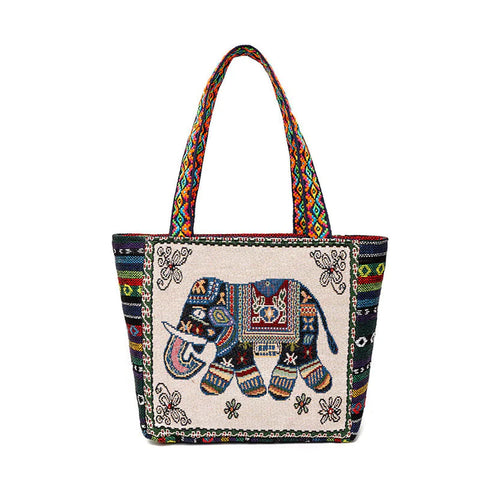
Compare your largest everyday object with the stated interior dimensions, allowing for lining and any internal pockets. Depth matters as well as height and width. Do not infer capacity in litres from a photograph or assume a flat decorative bag expands like a structured tote.
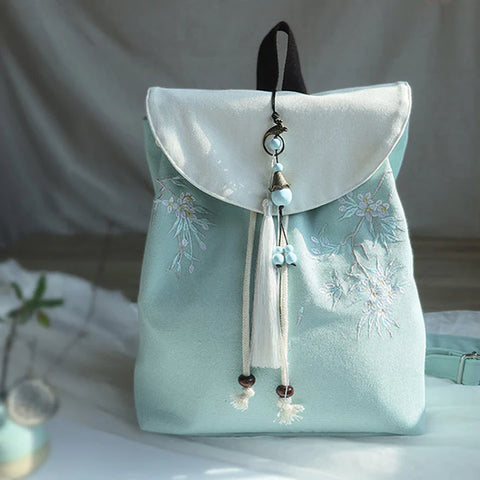
Check whether closing the bag reduces usable height or presses against the embroidery. A drawstring gathers fabric; a zip needs a clear path; a flap occupies space when folded. Each closure changes how you access the contents.
Examine Straps Handles and Attachments
Request strap width, usable length, and adjustment range. Confirm whether a quoted length describes the full strap or the drop from the shoulder to the bag. These are different measurements and can create very different wearing positions.
Look at attachment points and seams, especially where a strap joins a decorated panel. Do not assume a decorative cord is suitable for a heavy load. If a load limit matters, ask for a maker's stated limit rather than inventing one based on appearance.
Consider how the bag rests when filled with your normal contents. A narrow strap may feel different from a broad one, while a short handle may not pass comfortably over a coat sleeve. Choose the construction for your actual use rather than only the empty-bag photograph.
Keep Cleaning Specific to the Bag
The Canadian Conservation Institute discusses light damage and handling as important concerns for textiles. Those conservation principles support avoiding unnecessary exposure and rough treatment, but they are not a washing label for a new commercial bag.
Follow the maker's instructions for base fabric, thread, lining, interfacing, adhesives, and fittings together. Do not machine wash a composite bag merely because its outer fabric is cotton. Spot cleaning can also affect dye or finish, so it should not be assumed harmless.
For an old, fragile, or culturally significant bag, seek a textile conservator before attempting wet cleaning. A domestic care method intended for a washable new bag may be unsuitable. Do not use strong heat or aggressive brushing to restore flattened stitching.
Store and Repair Without Flattening the Work
Empty crumbs and sharp objects before storage. Support the bag lightly if its shape needs it, without stretching the panel or pressing hard against the embroidery. Keep it away from prolonged direct sunlight and damp storage conditions.
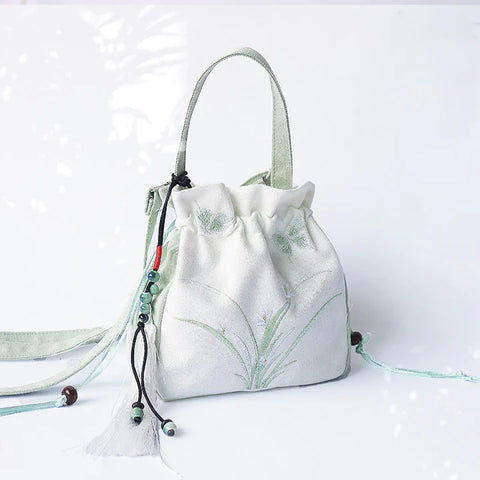
Avoid folding directly through dense raised decoration where possible. Store straps so metal fittings do not mark the embroidered surface. If you use a protective cover, choose one that does not snag the stitches or trap a damp bag.
Attend to a loose strap seam before adding a heavier load. Record the original appearance before repair, especially for a distinctive motif. A repaired bag can remain useful, but replacement work should not be passed off as unchanged original embroidery.
Evaluate Maker and Sourcing Claims
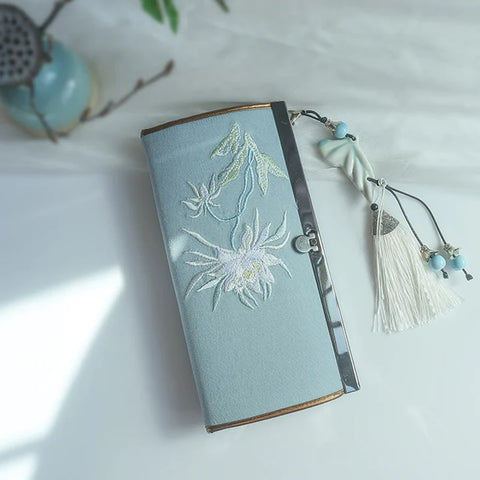
Ask who made or supplied the decorated panel and how the seller knows. A claim that a purchase supports artisans needs information about the actual relationship, not simply a photograph of traditional work. Design inspiration alone does not establish fair payment or local manufacture.
Choose a bag whose decoration you enjoy, whose usable space fits your belongings, and whose care is realistic. Honest descriptions of machine work, mixed materials, or uncertain provenance are more useful than an elaborate unsupported story. Good everyday use begins with understanding the complete object.
Factual References
Related Reading
Frequently Asked Questions
Does Handmade Cover the Entire Bag
Not necessarily. Ask separately about embroidery, cutting, assembly, and finishing.
Is Cotton Canvas Rainproof
Not automatically. Ask about any actual treatment and its limits across seams and openings.

Does a Flower Motif Prove a Regional Origin
No. A cultural attribution needs a named source or documented maker context.
Which Dimensions Matter for a Phone
Compare both the usable opening and interior dimensions with the phone or case.
Can I Cut a Loose Embroidery Thread
Not before identifying it. It may secure nearby stitches.
Does a Cultural Design Prove Artisan Support
No. Ask for evidence about who made the bag and the seller’s actual relationship with them.

