



Ganesha Statues Recognising Features and Understanding Context
Ganesha is recognizable through his elephant head and human body, but his statues vary in posture, number of arms, held objects, ornaments, materials, and setting. A seated bronze from Java, a stone temple sculpture from Karnataka, and a dancing figure from Nepal can represent the same deity without following one identical design.
Understanding a statue therefore requires more than assigning a fixed meaning to each body part. Begin with the object, its documented place and period, and its devotional or artistic context. This guide uses museum examples to explain common attributes, different stories, material choices, and respectful display. It treats religious beliefs as beliefs rather than promises that owning a statue will produce success or remove practical difficulties.
Ganesha in Hindu Devotional Context
Ganesha, also written Ganesh, is the elephant-headed son of Shiva and Parvati in Hindu traditions. He is widely associated with beginnings and obstacles and is invoked before many undertakings. The National Museum of Asian Art describes him as the remover of obstacles and deity of new beginnings, while other museum accounts emphasize his power both to create and remove obstacles.
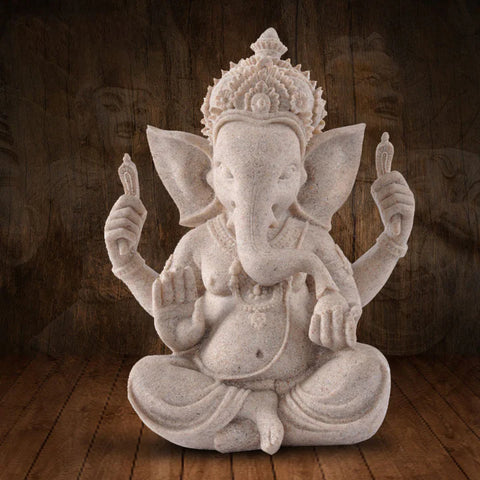
That fuller formulation matters. A devotional relationship with Ganesha is not simply a transaction in which a purchased object delivers an outcome. Worship can involve prayer, offerings, festivals, family practice, and guidance within a particular community. These practices vary and should not be replaced by a universal commercial recipe.
A statue may be used for worship, retained as an artwork, inherited as a family object, or studied in a museum. Its physical appearance alone does not tell you whether it has been consecrated or what rituals its owner follows. Ask about intended use rather than assuming every representation functions in the same way.
Use Dated Objects Instead of One Origin Claim
Claims that the first Ganesha statue appeared exactly two thousand years ago require evidence identifying the object, dating method, and scholarly source. A modern product page should not turn an uncertain historical origin into a precise fact. Surviving sculptures provide firmer examples of when and where particular forms were made.
The Cleveland Museum of Art records a sandstone Ganesha from the 600s, attributed to southern Cambodia or Vietnam. Its account places the image among early large-scale stone representations of Hindu deities in Southeast Asia. This supports a specific regional example, not a declaration that it is the first Ganesha ever made.
Other documented objects include a ninth-century bronze from Java, a twelfth-century copper-alloy image from Tamil Nadu, a twelfth- to thirteenth-century stone figure from Karnataka, and a roughly fifteenth-century bronze from Thailand. Together they show a long and geographically varied visual tradition. Their differences deserve attention rather than being treated as errors against a single timeless model.
The Elephant Head and Stories of Its Origin
One widely told account says Parvati created a son and asked him to guard her bathing place. Shiva returned, was refused entry, and cut off the boy's head. After Parvati's distress, an elephant head restored him to life. The National Museum of Asian Art presents this as one legend in its educational material.
Tell this account as a particular narrative, not as a historical event or the only version known to all Hindus. Details change across texts, regions, communities, and retellings. An artwork may depict Ganesha without illustrating the episode of his birth or replacement head at all.
The elephant head can help identify the deity, but a plain elephant sculpture is not automatically Ganesha. Look for the human body, posture, arms, attributes, ornaments, pedestal, and surrounding figures. A modern elephant-headed fantasy figure should not be labeled a traditional Ganesha form without additional evidence.
The Broken Tusk Has More Than One Story
A single intact tusk and a broken tusk held in a hand are frequent identifying features, but explanations vary. The National Museum of Asian Art relates the story of Ganesha serving as scribe for the Mahabharata and using his own tusk as a pen while the sage Vyasa dictated.
The Metropolitan Museum explains the tusk in some of its objects through a different tale involving Ganesha throwing it at the moon. These accounts should not be blended into one compulsory sequence or treated as proof that every broken tusk represents the same lesson.
When describing a particular statue, first state what is visible: one tusk is broken, a hand holds a tusk, or an attribute is missing. Then identify the narrative used by the source. Damage can also complicate reading, so an absent tusk should not be assigned a symbolic interpretation until the object's condition is understood.
Hands Sweets Goads and Other Attributes
Ganesha may have two arms, four arms, or more. In a twelfth-century Tamil Nadu copper-alloy statue at the Metropolitan Museum, the hands hold a lasso, an ax, a sweet, and a tusk. A roughly fifteenth-century Thai bronze has only two arms, holding a tusk and a damaged elephant goad. Neither should be judged incomplete simply because its arm count differs from another image.
A bowl or pot of sweets can appear beside the trunk, which may reach toward it. An elephant goad, ax, noose, rosary, snakes, and other objects also occur. Their interpretation depends on the form and source. A noose-like loop should not be called a rosary merely because both can be circular, and a broken handle may not identify its original implement securely.
The ninth-century Javanese bronze in the Metropolitan Museum holds a bowl, tusk, goad, and what the record cautiously calls a possible cluster of prayer beads. Preserve that uncertainty when describing it. The earliest Cambodian or Vietnamese example discussed here holds a radish, demonstrating why a universal checklist of four required objects would be misleading.
A small animal or attendant may appear near the base in some designs. Record what is actually present and use a source for its identity and role. Do not reject a statue as false merely because a familiar companion is absent from the visible composition.
Seated Standing and Dancing Forms
Pose changes the character and use of an image. A seated figure can be compact and stable, while a dancing form may extend arms and legs into a lively silhouette. The posture can relate to a named iconographic form or regional practice, but a general impression such as calm or energetic does not establish a ritual classification.
The Metropolitan Museum's sixteenth- to seventeenth-century dancing Ganesha from the Kathmandu Valley holds several recognizable attributes and uses a gilt-copper alloy. Its movement, surface, and scale differ from the large Karnataka stone sculpture in the National Museum of Asian Art, which is associated with Hoysala temple architecture.
Compare body position, crown, clothing, pedestal, and arrangement of arms together. A reclining or dancing commercial sculpture may be a modern interpretation. The maker should identify whether it follows a documented model, a named traditional form, or an original design.
Regional Clothing and Temple Settings
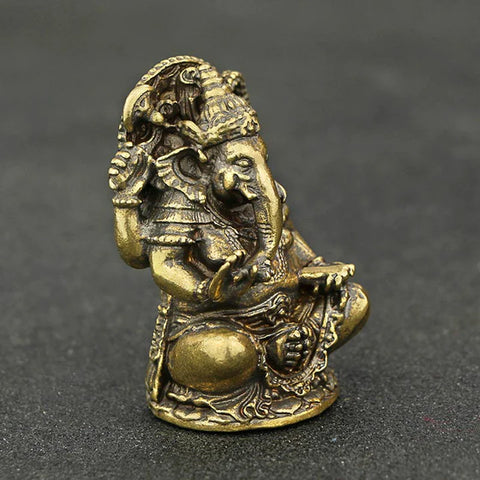
Regional details can be as informative as the familiar elephant head. The Metropolitan Museum identifies its Thai bronze through features including the crown, pleated wraparound garment, and decorated pedestal. A Javanese image has its own hairstyle and lotus seat, while Hoysala carving is associated with elaborate surfaces and architectural settings.
The National Museum of Asian Art discusses the likely location of its Karnataka Ganesha in a temple entry hall. That interpretation ties the figure to a particular building arrangement and devotional movement. It should not become a rule that every modern Ganesha must stand beside a front door facing one fixed direction.
A museum attribution may also be approximate or under revision. Preserve ranges such as twelfth to thirteenth century and descriptions such as southern Cambodia or Vietnam. Precise-looking labels are not more reliable when they discard the source's uncertainty.
Stone Bronze Resin and Other Materials
Historical Ganesha images were made in several substances, including stone and copper alloys. Museum records identify sandstone, chloritic schist, bronze, gilt-copper alloy, and other materials in the examples discussed here. These choices relate to workshop practice, scale, cost, surface treatment, and intended setting.
Modern statues may be carved stone, cast metal, ceramic, wood, resin, plaster, or mixed materials. Ask what the object is made from throughout. A bronze finish may be a coating over resin rather than solid bronze, and stone powder mixed with a binder is different from a single carved block.
Check dimensions, weight, stability, finish, and construction. Thin arms, trunks, tusks, and projecting ornaments can be vulnerable to impact. A heavy figure needs a shelf or base that supports it safely. Outdoor suitability should be confirmed by the maker rather than inferred from an antique appearance.
Some historical collections contain ivory sculptures. Their presence in a museum is not a recommendation to purchase wildlife material. For a modern choice, disclosed stone, metal, ceramic, wood, or resin can provide the intended form while allowing clearer sourcing and maintenance decisions.
Respectful Display and Devotional Use
If the statue is intended for worship, ask the relevant household, temple, teacher, or community about placement and handling. Consecration, offerings, orientation, and daily practice are tradition-dependent. A general article cannot replace that guidance or establish that one online placement rule applies to every form.
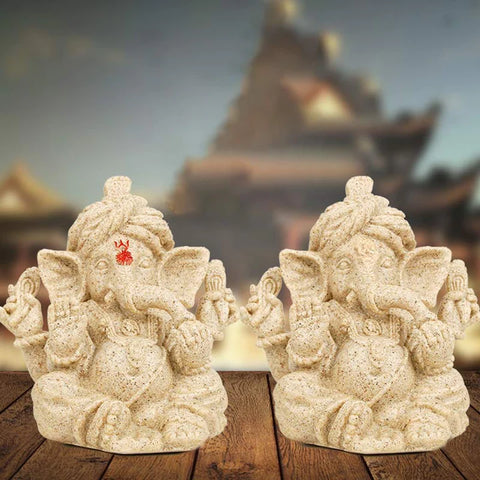
For an artwork displayed outside worship, choose a clean, stable location that allows the figure to be understood and handled thoughtfully. Consider whether the placement or surrounding objects trivialize a sacred image. A gift should take account of the recipient's beliefs and preferences rather than assume that everyone wants a Hindu devotional object.
Do not infer consecration, antiquity, temple origin, or blessings from a product photograph. Ask the maker for a description and documentation when those claims affect the purchase. A new statue can be meaningful as a new work; it does not need an invented sacred history.
Ganesha's association with beginnings can support a personal reminder to prepare for a new project. It should not be presented as a guarantee of business income, exam results, health, or freedom from difficulty. Practical effort and decisions remain part of the undertaking.
Cleaning Handling and Long Term Care
Support the statue at its stable base or main body when moving it. Do not lift it by a trunk, tusk, arm, crown, or attached ornament. Check whether separate parts or a hollow casting affect balance, and keep fragile pieces away from edges where they could be knocked.
Use cleaning methods suited to the material and surface. Gilding, paint, patina, lacquer, adhesives, and porous stone can be damaged by water, polishing compounds, solvents, heat, or aggressive brushing. Dust gently when appropriate and obtain specialist advice for antique, painted, damaged, or uncertain surfaces.
Offerings and ritual washing may also affect material condition. If the statue is used devotionally, coordinate suitable care with the practitioner and maker rather than assuming every substance tolerates the same treatment. Keep liquids and flame away from vulnerable surfaces and use a secure supporting arrangement.
Conclusion
A Ganesha statue becomes easier to understand when its attributes are read together with its date, region, material, and intended setting. Arm counts, posture, held objects, clothing, and stories vary across documented examples. That variety is part of the tradition's history.
Describe visible features carefully, retain uncertainty from reliable records, and seek community guidance for devotional use. Then choose and maintain the statue through accurate material information, stable display, and thoughtful handling.
Factual References
- Ganesha from the 600s at the Cleveland Museum of Art
- Ganesha from Tamil Nadu at the Metropolitan Museum of Art
- Seated Ganesha from Karnataka at the National Museum of Asian Art
- Seated Four Armed Ganesha from Java at the Metropolitan Museum of Art
- Seated Ganesha from Thailand at the Metropolitan Museum of Art
- Dancing Ganesha from Nepal at the Metropolitan Museum of Art
- Identifying Ganesha in Puja from the National Museum of Asian Art
Related Reading
- Elephant Symbolism Cultural Examples and Jewelry Motifs
- Peacock Symbolism Cultural Images and Modern Jewelry
Frequently Asked Questions
How Can I Recognise a Ganesha Statue?
Look for an elephant head on a human body, then examine posture, arms, tusks, held objects, ornaments, and pedestal. A plain elephant is not automatically Ganesha. Use a source when identifying a specific form.
Must Ganesha Have Four Arms?
No. Documented sculptures include two armed, four armed, and more elaborate forms. Regional practice, date, and the intended image affect the arrangement.
Why Is One Tusk Broken?
Several stories explain it. One relates to Ganesha writing the Mahabharata with a tusk; another concerns an encounter with the moon. Identify the story used by the source rather than treating one explanation as universal.
Does Every Statue Hold the Same Objects?
No. Museum examples include sweets, a tusk, goad, ax, noose, prayer beads, snakes, and a radish. Damage can obscure an attribute, so uncertainty should be retained.
Which Direction Should a Statue Face?
For worship, follow guidance relevant to the household, temple, community, and form. A placement described for one historical temple is not a universal rule for every modern statue.
Does Buying a Ganesha Statue Guarantee Success?
No. Ganesha is associated with beginnings and obstacles in Hindu devotion, but owning an object does not guarantee financial, academic, health, or personal outcomes.
How Should a Statue Be Cleaned?
Follow its material and surface treatment. Support it at the base, protect projecting parts, avoid unverified cleaners, and seek specialist advice for antiques, gilding, paint, damage, or uncertain materials.