



Jasper: Colours, Patterns and Everyday Jewelry
Jasper rewards a close look. Red fields may be crossed by cream veins, brown pieces can resemble a distant landscape, and green material may carry spots or patches that change from bead to bead. Those patterns are the main reason many people choose it.
The name is used broadly in the gem and stone trade. It usually refers to dense, opaque, silica-rich material related to chalcedony or chert, but some popular trade names are applied to rocks that do not meet a strict gemological definition of jasper.
This guide focuses on what a buyer can actually assess: color, pattern, finish, construction, disclosure, and care. Personal symbolism can be added without promising that the stone treats anxiety, creates confidence, or changes health.
What the Name Jasper Describes
GIA describes agate and jasper as varieties of chalcedony made of tiny quartz crystals that are not visible to the unaided eye. Jasper is generally opaque and may contain other minerals that produce its colors and patterns.
Definitions vary between gemology, geology, collecting, and commerce. GIA research on so-called Dalmatian jasper, for example, recommends the name Dalmatian stone because that spotted rock does not meet the gemological definition of jasper.
That does not make a decorative material unattractive. It means the seller should use a specific and accurate name rather than treating every patterned stone as the same substance.
Why Jasper Comes in So Many Colours
Jasper appears in red, yellow, brown, green, gray, black, cream, and mixed colors. Iron oxides are important sources of red, yellow, and brown, while other minerals and the rock’s formation history contribute additional shades and markings.

Color is not a reliable identification by itself. Different rocks can share a similar brick red or olive green, and lighting, polishing, dye, coatings, and image editing can alter what a buyer sees.
Compare the exact piece in neutral light when possible. For an online order, check whether the photographs show the item you will receive or a representative sample.
Pattern Names Are Often Trade Names
Picture, ocean, landscape, brecciated, leopard skin, poppy, Picasso, rainforest, and many other names appear in jasper listings. Some point to a recognizable pattern or source; others are flexible marketing labels used differently by different sellers.
A trade name does not automatically identify mineral composition, mine, treatment, or rarity. Ask the seller what the material is, where the name comes from, and whether location or treatment claims are documented.
Choose by the pattern in front of you. A descriptive name can help search, but the actual color distribution, polish, durability, and workmanship determine whether the piece suits you.
Red Jasper
Red jasper ranges from muted brick and rust to deeper brownish red. The color is commonly connected with iron oxides. Cream, gray, black, or brown veins and patches may remain visible after polishing.
Retail symbolism often connects red jasper with drive, courage, grounding, or stamina. Those associations can make a gift feel intentional, but wearing the material has not been shown to increase physical energy or treat fatigue.
For a strand, compare how the beads have been matched. Some designs aim for uniform red; others deliberately show the full natural-looking range.
Green, Yellow, Brown and Multicoloured Jasper
Green jasper can be plain, mottled, or combined with red and other colors. Bloodstone is traditionally a dark green chalcedony or jasper with red inclusions, but that name should not be applied to every green-and-red stone.
Yellow and brown pieces often show mustard, ochre, tan, rust, or chocolate tones. Bands, breccia-like fragments, or scene-like patterns can give a cabochon the appearance of hills, water, or sky without the image being deliberately painted.
Blue or vivid purple material deserves extra questions because those colors are less typical and some commercial stone is dyed or sold under a loose name. Appearance alone cannot settle the issue.
Choosing Beads
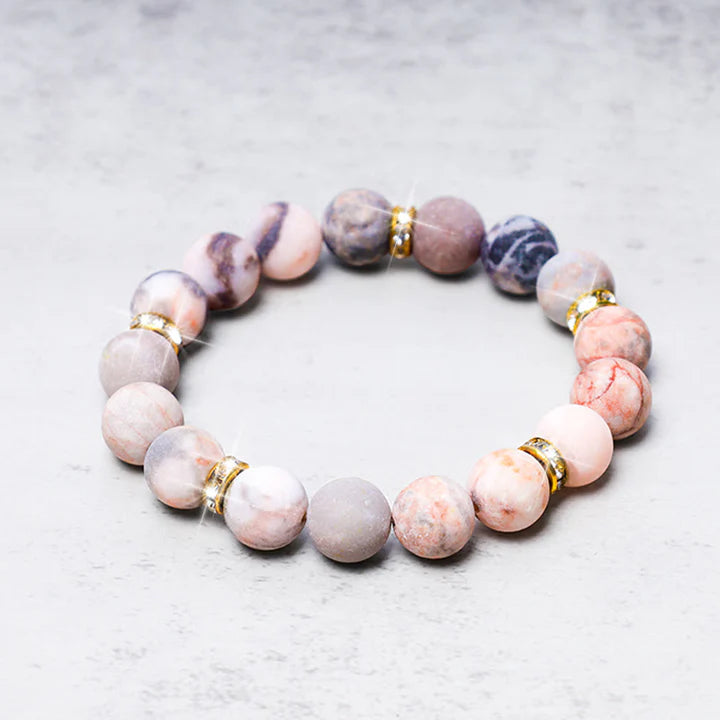
Check bead diameter, strand length, inner fit, weight, drill holes, polish, and the condition of the elastic or cord. Large beads reduce the usable inner space and can feel heavier than expected.
Look for chips around drill holes and sharp pits that may abrade string. Natural cavities can be part of the material, but they should not be hidden by photography or described as harmless when they weaken the bead.

A well-matched strand may repeat color and size closely. A deliberately mixed strand should still feel balanced and should use beads with a compatible finish and durability.
Choosing a Pendant or Carving
A cabochon or pendant can show a larger uninterrupted pattern than a small bead. Examine whether the cutter centered the most interesting area and whether the polish is even across curves and edges.
Check the bail, hole, wire wrap, glue, and metal description. A heavy pendant needs a chain or cord rated for its weight. Carved points, thin edges, and drilled corners deserve protection from knocks.
In scene-like jasper, value is partly aesthetic. Two pieces from the same material can differ greatly because one cut captures a compelling pattern and another does not.
Treatments and Imitations
Chalcedony materials can be dyed, bleached, impregnated, coated, or assembled. Ask whether the color is natural and whether any stabilizing or surface treatment has been used.
Color concentrated in cracks or drill holes may raise a question about dye, but it is not a complete home test. Avoid solvents, hot needles, scratching, and other destructive methods on finished jewelry.
For a costly specimen, claimed rare locality, or important collection piece, use an independent gemologist or appropriate laboratory rather than relying on a trade name and seller photograph.
Everyday Wear and Care
Jasper’s quartz-rich composition makes it suitable for many beads, pendants, and carvings, but it can still scratch, chip, or fracture. Protect the piece from hard blows and store it away from harder gems.
For many intact, untreated jasper pieces, warm water, mild soap, and a soft cloth are a practical approach. The whole item may also contain dye, coatings, glue, elastic, plating, or other stones, so follow the needs of the most sensitive part.
Remove jewelry for sport, bathing, swimming, household cleaning, and work around machinery. Inspect cord and clasps instead of waiting for a strand to break.
Using Jasper as a Personal Reminder
You might enjoy turning a jasper bead in your hand while taking a quiet break. Describe the texture and pattern you notice rather than promising that a timed exercise will settle the nervous system.
If red represents finishing a task or brown represents keeping a steady schedule, connect the color to a concrete action. The action can be tested and adjusted; the stone remains a reminder.
Persistent anxiety, low mood, pain, sleep problems, or other health concerns require appropriate professional care. Jasper can be meaningful jewelry without serving as treatment.
Questions to Ask Before Buying
Ask for the exact material or trade name, known source, treatment disclosure, dimensions, weight, metal components, and whether the photos show the exact object. Request a close image of drill holes, edges, and any repaired area.
Be cautious with claims that a particular pattern is ancient, rare, therapeutic, or from one mine unless the seller provides evidence. A poetic name is not a laboratory identification.
Confirm the return policy. Patterned stones vary naturally, so buyers need to know whether a replacement may look substantially different.
Conclusion
Jasper’s patterns are the reason to look closely. Choose the piece you like, check its finish, and keep any personal ritual separate from a claim about treatment.
Use trade names as descriptions rather than proof. Accurate material and treatment information, sound construction, and realistic care matter more than a promise attached to the color.
Factual References
Gemological Institute of America, “Gem Cutters Reveal the Beauty of Chalcedony”: https://www.gia.edu/gia-news-research/gem-cutters-reveal-beauty-chalcedony
Gemological Institute of America, “True Colors of Dalmatian Jasper”: https://www.gia.edu/gems-gemology/fall-2017-dalmatian-jasper
Smithsonian Institution, Q?rius, “Chalcedony”: https://qrius.si.edu/browse/object/10849694
Related Reading
Frequently Asked Questions
Is jasper a type of quartz
Jasper is generally described as dense, opaque, silica-rich material related to chalcedony or chert. Definitions and trade usage vary, so a specific patterned material may need closer identification.
Are jasper trade names standardized
Many are not. Names such as picture, ocean, leopard skin, or Dalmatian may be used differently across sellers and do not automatically prove composition or source.
Can jasper be dyed
Yes, chalcedony materials can be dyed or otherwise treated. Ask for disclosure and avoid destructive home tests on finished jewelry.
How should I clean jasper jewelry
For many intact untreated pieces, use mild soap, warm water, and a soft cloth. Check first for dye, coatings, glue, elastic, plating, and other materials that may require gentler care.
Does jasper calm anxiety or build confidence
Those are symbolic or personal interpretations, not established treatments. A bracelet can be a reminder for a chosen action, while health concerns need appropriate professional support.


