



Three Stones for a Meaningful Gift: Citrine, Strawberry Quartz and Amethyst
A meaningful jewelry gift does not need three promises about love, luck, and happiness. It needs one choice that suits the recipient and one honest reason you can explain in your own words.
Citrine, strawberry quartz, and amethyst offer three different color stories: warm yellow to orange, translucent pink with visible inclusions, and violet to reddish purple. All are sold in quartz jewelry, but their names, treatments, and appearances deserve separate checks.
Start with the person rather than a list of crystal effects. Consider the colors they wear, the type of jewelry they use, the maintenance they will accept, and the memory or occasion the gift is meant to mark.
Citrine: Warm Transparent Quartz
Citrine is transparent yellow to brownish orange quartz. The color can be pale and lemon-like, honeyed, golden, or deep reddish orange, and faceting is commonly used to give the stone brightness and movement.
Natural citrine is uncommon. GIA states that most citrine on the market is produced by heating amethyst. Heat treatment is widely accepted, but it should still be disclosed because it explains the material and helps a buyer compare descriptions honestly.
Do not assume that every orange crystal cluster is rare natural citrine. Ask whether the material began as amethyst, whether it was heated, and whether photographs show the exact item under neutral light.
Strawberry Quartz: A Trade Name That Needs Detail
Strawberry quartz is not a strictly defined gemological term. It is generally used for quartz whose pink to red appearance comes from numerous visible inclusions, often described as hematite flakes or needles.
GIA has documented pink aventurine quartz with iron-bearing red muscovite inclusions being submitted as strawberry quartz. That does not make the material unattractive; it shows why the trade name alone cannot identify every pink included quartz.
Look for the actual inclusion pattern. Fine red specks, flat flakes, cloudy areas, clear zones, and glitter can vary widely. Ask whether the seller has a tested identification or is using strawberry quartz as a visual market name.
Amethyst: Purple Quartz with Visible Zoning
Amethyst is the purple variety of quartz. It ranges from pale lilac to saturated reddish purple, and many stones show angular zones of lighter and darker color.
A darker stone is not automatically better. If the tone is too deep, it may look almost black in ordinary indoor light. Compare the piece against a white background and in the lighting where the recipient is likely to wear it.
Amethyst may be natural or laboratory-grown, and some material has been heated, dyed, or fracture-filled. Ask for these details rather than treating the word natural as a complete description.
Compare Colour Before You Compare Meaning
Citrine brings a warm focal point that often suits tan, brown, cream, navy, and autumn colors. Strawberry quartz can read as blush, rose, rust, or translucent red depending on inclusion density. Amethyst ranges from cool lavender to warm raspberry-purple.
Check the recipient's existing jewelry. Do they wear small neutral pieces, large color accents, warm metals, silver-colored metals, or mixed materials? A familiar scale is often more wearable than a dramatic design chosen only for symbolism.
Ask for photographs on a hand or beside a ruler. Screen color is inconsistent, so a neutral daylight image, an indoor image, and a short video give a more useful comparison than a single edited close-up.
A Personal Gift Story for Each Stone
Citrine can suit a birthday in November, a warm-color wardrobe, or a reminder of a sunny trip. It does not need to be described as a magnet for wealth to carry a positive message.
Strawberry quartz can mark affection through its pink-red color and its visible internal pattern. A note might say that the tiny inclusions reminded you of shared details that become meaningful over time.
Amethyst can suit a February birthday, a quiet evening memory, or someone who simply wears purple. If the gift marks a calm moment together, say that directly rather than claiming the stone regulates sleep or the nervous system.
One Stone, Two Stones, or All Three
A single-stone piece gives the clearest visual idea and makes treatment and care easier to explain. Two stones can work when their sizes and colors balance, while a three-stone design needs enough space for each material to remain recognizable.
There is no physical morning-afternoon-evening energy sequence for citrine, strawberry quartz, and amethyst. Wearing them together does not create a measured synergy or guarantee a particular emotional result.
If all three colors match the recipient, use an ordinary design reason: a sunrise-to-twilight palette, three dates, three family members, or three parts of a shared journey. The story belongs to the gift, not to a promise of automatic change.
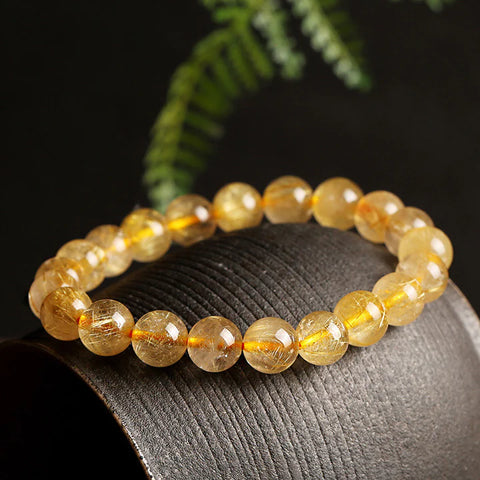
Bracelet Fit and Construction
For a bracelet, request bead diameter, inner circumference, total weight, cord or elastic type, spacer material, and knot placement. Larger beads reduce the usable inner circumference and create a heavier strand.
Inspect every drill hole in close photographs. Quartz is durable enough for many jewelry uses, but chips and fractures around holes can cut cord or expand under tension. Inclusion-rich strawberry quartz may need especially clear close views.
Roll elastic over the hand rather than stretching one section sharply. Replace the cord when it becomes fuzzy, flattened, loose, cracked, or permanently extended.
Pendants, Rings and Earrings
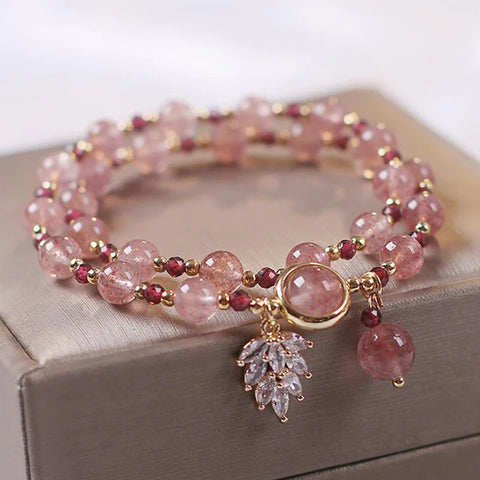
Pendants and earrings usually receive fewer knocks than rings and bracelets. They are practical choices for a person who likes color but does not want to monitor a stone worn on the hand.
For rings, look for protected corners, even prongs, a smooth bezel, and enough metal support for the stone's size. Quartz has a Mohs hardness of 7, but it can still scratch, chip, or abrade over years of wear.
Check metal identity, plating, nickel information where relevant, total dimensions, weight, and fastening parts. A beautiful stone does not compensate for a weak jump ring, rough ear wire, or unstable setting.
Treatment and Identity Questions
Ask whether each stone is natural or laboratory-grown and whether it has been heated, irradiated, dyed, coated, filled, stabilized, assembled, or otherwise treated. Request the answer in writing and make sure it applies to the exact item or lot.
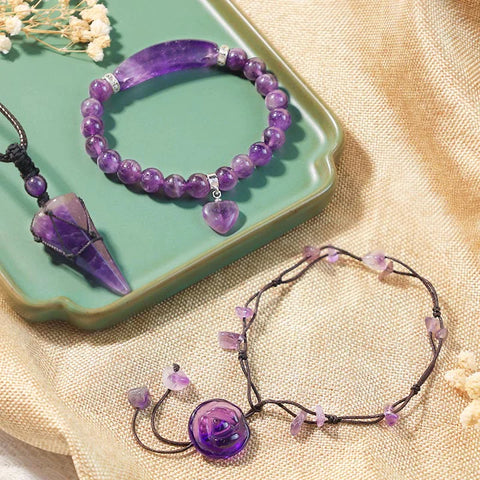
For citrine, ask directly whether it is heated amethyst. For strawberry quartz, ask what the inclusions have been identified as and whether the name is a tested identity or trade description. For amethyst, ask about laboratory growth, heat, dye, and fracture filling.
Avoid home scratch, solvent, burn, or hot-needle tests. They can damage the jewelry and still fail to distinguish natural, treated, synthetic, and imitation materials reliably.
Cleaning and Storage
Warm water, mild soap, and a soft cloth are suitable for many intact untreated quartz pieces. Use a soft brush around an open setting, rinse briefly, and dry the jewelry completely.
Steam is a poor default, and sudden temperature changes can fracture quartz. Avoid ultrasonic cleaning when dye, fracture filling, extensive inclusions, glue, elastic, plating, or mixed materials are present.
GIA advises protecting amethyst from prolonged intense light and heat because some color can fade. Store the three stones separately from harder gems and metal edges, and remove them for swimming, bathing, exercise, and household cleaning.
Write the Note Instead of Making a Promise
A short note can give the gift a meaning that generic crystal language cannot. Name the moment, the color, and the reason: 'I chose the warm yellow because it reminds me of our first summer trip.'
Keep the message about the relationship or occasion. Avoid saying that citrine will attract money, strawberry quartz will secure love, or amethyst will cure anxiety and improve sleep.
If the recipient enjoys spiritual symbolism, you can acknowledge traditional or modern associations as beliefs. The distinction matters: a chosen symbol can be meaningful without being presented as a medical, psychological, or financial tool.
A Practical Gift Checklist
Before ordering, confirm the exact stone name, treatment disclosure, actual-item photographs, dimensions, weight, fit, metal, clasp or cord, condition, return terms, and care instructions.
Choose a design the recipient can use without changing their routine. Someone who works with their hands may prefer earrings or a pendant; someone who never wears necklaces may appreciate a small bracelet with a measured fit.
Keep the packaging information and any item-specific report. A clear description of what the jewelry is will remain more useful than a certificate filled with unstandardized words such as AAA, healer grade, or high vibration.
Conclusion
Choose one color and one reason that fits the recipient. Citrine offers transparent warmth, strawberry quartz offers an included pink-red pattern, and amethyst offers a broad range of violet tones.
Compare the exact piece, ask how it was identified and treated, and select a construction suited to real wear. A personal explanation is more meaningful than promising three different emotional effects.
Factual References
Gemological Institute of America, 'Citrine': https://www.gia.edu/citrine
Gemological Institute of America, 'Citrine Buyer's Guide': https://www.gia.edu/citrine/buyers-guide
Gemological Institute of America, 'Pink Aventurine Quartz with Alurgite Inclusions': https://www.gia.edu/gems-gemology/fall-2021-gemnews-pink-aventurine-quartz-algurite-inclusions
Gemological Institute of America, 'Amethyst Care and Cleaning Guide': https://www.gia.edu/amethyst-care-cleaning
Related Reading
Frequently Asked Questions
Is most citrine heated amethyst?
Yes. GIA states that natural citrine is rare and that most citrine on the market results from heating amethyst. The treatment is common, but sellers should disclose it.
Is strawberry quartz a precise gemological name?
No. It is a market term used for several pink to red included quartz materials. Ask what the inclusions have been identified as and whether the exact piece was tested.
Do these three stones create stronger energy together?
There is no reliable evidence that combining them produces a measurable emotional effect. Choose the group for its color, design, personal story, or spiritual symbolism.
Can amethyst improve sleep?
Amethyst is linked with calm in modern crystal traditions, but it is not a proven sleep treatment and should not be described as regulating the nervous system.

How should I clean a mixed quartz bracelet?
Use mild soap, lukewarm water, and a soft cloth when the stones and construction are intact and untreated. Avoid soaking elastic or glued parts and avoid steam, sudden heat, and ultrasonics when treatments are uncertain.

