Tibetan Style Bracelets Designs Materials and Buying Questions
A bracelet described as Tibetan style may use braided cord, beads, inscriptions, or metal spacers. Those features can guide a design choice, but the label alone does not tell you where it was made or whether it was used in a religious ceremony. Start by separating appearance, manufacture, and any claimed blessing.
Then examine the construction. A bracelet should fit at its intended wearing position, open far enough to go on comfortably, and come with care instructions for all its materials. A traditional description cannot substitute for those practical details or establish that a particular cord will last longer than another.
Ask What Tibetan Style Describes
Style describes an appearance or influence. Made in Tibet is a claim about manufacture. Blessed by a named practitioner is a claim about a particular action. Ask the seller to explain which of these they mean rather than allowing one to imply the others.
If manufacture matters to you, request the place of bead production, braiding, and final assembly where known. These stages may occur in different places. An imported component does not automatically invalidate a design, but its origin should not be replaced with a more appealing story.
For a blessing claim, ask who performed it and what documentation accompanies the actual item. Lack of documentation should remain an uncertainty. A photograph of a monastery or a general reference to monks does not demonstrate a bracelet's individual history.
Read Symbols Before Assigning Meanings
Ask for a clear image of any inscription, its script, a transcription, and an explanation of the text. Decorative lettering may be difficult to read at small scale. A product name should not be treated as a reliable translation of an unseen inscription.
The Rubin Museum's prayer wheel collection describes the mantra Om Mani Padme Hum in relation to Avalokiteshvara, the bodhisattva of compassion. That provides a named religious context for the text. It does not prove that every bracelet bearing similar letters is correctly inscribed or used in the same way.
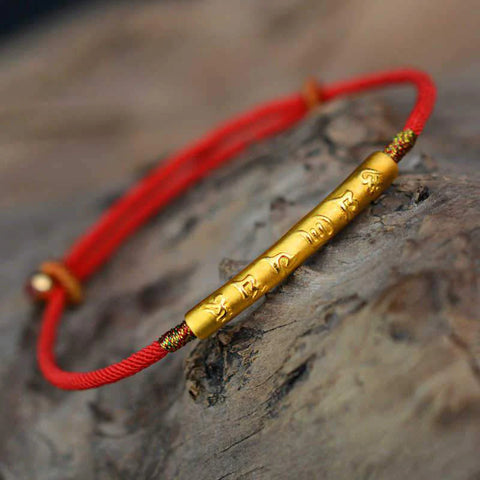
If a seller describes a bead as sacred or protective, distinguish a belief or practice from a verified material effect. You can respect the association without promising that wearing the bracelet will prevent harm, attract money, or change health.
Identify Every Component
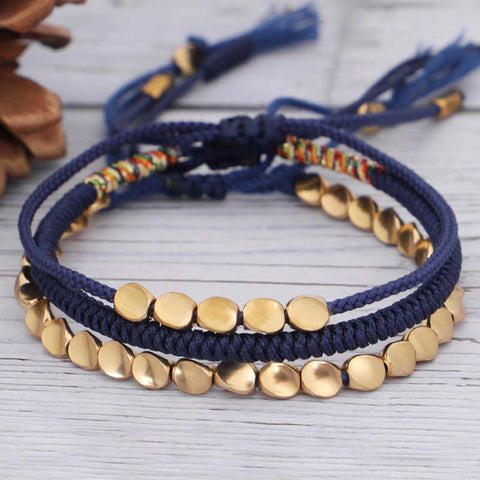
Request the actual material of the counting beads or decorative beads, not only a trade name. Wood, seed, stone, glass, and resin can look similar in photographs. Ask whether colour comes from the material, a dye, or a surface coating when the seller knows.
For metal spacers, ask about the base metal and finish. A silver-coloured surface does not identify an alloy. If skin sensitivity affects your purchase, obtain specific composition information rather than relying on phrases such as spiritual metal or premium alloy.
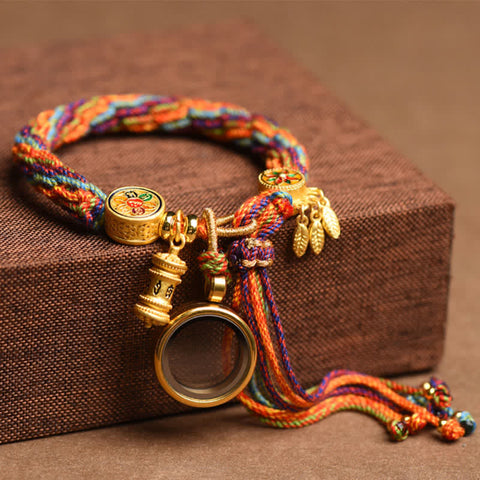
Include the cord, tassel, charm attachment, and adhesive in the description. These less visible parts often determine maintenance. A bracelet can contain water-tolerant beads while still having a cord or coating that should not be soaked.
Compare Braided Cord and Elastic
A braided sliding design opens through its knot arrangement. An elastic strand stretches over the hand. Neither construction is universally stronger. Fibre, thickness, knot quality, bead-hole edges, usage, and condition can change the result.
Ask for the intended opening method and adjustment range. Do not pull on a charm to loosen a knot or use repeated hard stretching as a strength test. If a knot is stiff, obtain guidance rather than forcing the ends in opposite directions.
A simple red cord is still a physical cord. It can fray, loosen, or break. Its colour or cultural association does not make it immune to wear. Choose it for the design and meaning you value while planning to inspect it like other frequently worn jewelry.
Measure the Wrist and the Opening
Measure the actual wrist at the intended wearing position without pulling the tape tightly. Compare that number with the seller's recommended wrist range. A laid-flat length does not always describe the internal space available once the bracelet is curved.
For a sliding bracelet, ask for both the smallest usable circumference and the maximum opening. A size that fits the wrist may still fail to pass comfortably over the hand. For elastic, ask how the seller accounts for bead diameter in the fit.
Check whether large spacers or a central charm press against the wrist when typing or bending. Tightening the cord to stop all movement can create pressure. Some rotation may be normal; a different bead size or construction may be a more comfortable solution.
Inspect Beads Knots and Spacers
Look closely around drilled holes for sharp edges, chips, or a cord rubbing against metal. Check that spacers sit as intended and that attachments are closed. A front-facing product photograph may hide the areas most relevant to wear.
Ask whether the knot is accessible for repair and whether restringing is available. An attractive arrangement is easier to maintain when its assembly method is known. Keep a photograph of the bead order if the sequence matters to you before sending it for work.
Do not trim a cord tail merely because it seems long. It may be part of the adjustment system or help prevent the end from passing through a knot. Ask what can be shortened and how the end should be finished.
Plan Care for the Whole Bracelet
Follow the most restrictive appropriate instructions among the components. Unless the maker permits it, remove the bracelet before bathing, swimming, or activities that soak or snag it. Let a damp cord dry naturally as directed rather than using strong heat.
Wipe beads and fittings using a method suited to their identification and finish. Do not put an entire mixed bracelet into a metal cleaning dip. Avoid household oils on an unidentified seed or wood surface unless the maker specifically recommends them.
Inspect periodically for thinning, loose knots, permanent elastic stretch, or new gaps between components. There is no universal replacement calendar. Put aside a visibly weakened bracelet and arrange repair before wearing it again.
Make a Choice You Can Explain
Before ordering, write down what you know about style, origin, inscription, and construction. Mark what remains unknown. This short record makes it easier to compare a well-described bracelet with one whose main selling point is an unverifiable story.
For a gift, include the adjustment method and material information, especially if the recipient has preferences about religious imagery. Do not tell them the bracelet must never be removed or that removing it will cause misfortune. Practical care can coexist with respectful personal use.
A considered purchase combines a design you enjoy with honest information about its making and maintenance. Clear answers are more useful than a blanket claim that all Tibetan style bracelets are blessed, handmade, or exceptionally durable.
Factual References
Related Reading
- Tibetan Jewelry Context and Provenance
- Bead Bracelets Measuring Fit
- Tibetan Style Rings Materials and Inscriptions
Frequently Asked Questions
Does Tibetan Style Mean Made in Tibet
No. Style, place of manufacture, and religious use are separate claims.
Does Red Cord Prove a Blessing
No. Ask for information about the actual bracelet and any claimed ceremony.
Is Braided Cord Always Stronger than Elastic
No. Materials, construction, bead holes, use, and condition matter.
What Sizes Does a Sliding Bracelet Need
Ask for its minimum usable size, maximum opening, and recommended wrist range.
Can All Mixed Bracelets Be Soaked
No. Cord, finishes, adhesives, and beads may require different care.
When Should Cord Be Replaced
Use condition and maker guidance, including fraying or loosened knots, rather than one universal schedule.