



Tibetan Conch Trumpets Form Craft and Ritual Context
A Tibetan conch trumpet is a shell adapted as an instrument, sometimes with metal fittings and inlays. A decorative shell, a playable instrument, and a documented ritual object are different descriptions. Begin by asking which one is being offered and what evidence supports the claim.
This guide examines construction and context through a specific museum example. It does not promise that a low sound calms the nervous system or that a shell's spiral creates a therapeutic effect. Sound, religious significance, material identification, and safe maintenance should be explained separately.
Start with a Documented Instrument
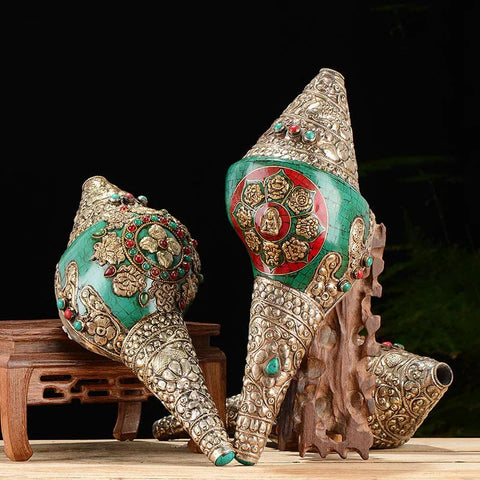
The Metropolitan Museum of Art records a nineteenth-century Tibetan Ritual Conch Shell Trumpet, also named Dung-Dkar, object 2022.302. Its listed materials are conch shell, silver, turquoise, and coral, and its length is 22 centimetres.
This record shows a particular composite instrument with a named place and period. It does not establish that every conch trumpet has the same fittings, dimensions, or history. Use the example to understand the category while examining each new object separately.
A modern object can be inspired by such instruments without being antique or prepared for ritual use. Its description should state what is known about manufacture and intended function. A museum comparison cannot supply missing provenance for a commercial item.
Distinguish Shell and Adaptation
A natural shell has a biological form. Turning it into a trumpet involves an opening and a playable blowing arrangement appropriate to the design. Ask whether the object was adapted for sound or is sold only for display.
Do not assume that an ornamental mouthpiece is functional. It may conceal a different structure or be unsuitable for playing. Request a demonstration and an explanation from the maker if playability is central to the purchase.
Do not drill, cut, or reshape a shell at home to imitate an instrument. Modification can damage it and introduce sharp edges or dust. Seek qualified advice rather than treating the shell as a simple craft blank.
Read Spiral Descriptions Carefully
Spiral direction can be important in descriptions of conch symbolism, but it must be identified using a clear viewing convention. Ask the seller to explain the orientation and provide views of the opening and spire. A side photograph can be ambiguous.
Do not infer rarity, species, or age solely from a direction label. Those are separate identification and provenance questions. A marketing phrase such as sacred geometry does not establish a biological classification or a physical effect on the listener.
If the symbolic distinction matters to a religious use, ask someone knowledgeable in that tradition about the actual object. Avoid applying one online diagram without checking how the source defines its viewpoint and terminology.
Examine Mouthpiece and Metalwork
Look at how metal fittings attach to the shell and whether joins are secure. Ask about the base metal, plating, solder, inlays, and adhesive where present. A silver colour does not identify silver, and a turquoise colour does not identify a stone.
Check the areas that may contact the mouth or hands for sharp edges, loose parts, or damaged surfaces. A display object may not have been made with playing contact in mind. Do not assume decorative materials are suitable for that use.
Ask whether fittings are intended to be removed for maintenance. Do not twist them off merely because they appear separate. A join can be structural, decorative, or sealed in a way that requires professional handling.
Describe Sound without a Health Promise
A recording can help you understand the sound of the actual instrument, but recording equipment and playback conditions affect what you hear. It does not establish a standard pitch, loudness, or therapeutic frequency for all conch trumpets.
The instrument's sound also depends on its construction and the player. A larger-looking shell is not enough to predict how it will respond. Ask for maker information rather than deriving acoustic performance from decorative shape.
Do not claim that low frequencies automatically soothe nerves, clear energy, or treat a condition. A listener may find a sound pleasant or meaningful, but personal response is not a guaranteed medical effect. Keep cultural belief and measurable performance distinct.
Learn the Ritual Setting
Ask where and by whom the instrument is used in the tradition relevant to it. A Tibetan Buddhist ritual instrument is not interchangeable with every shell trumpet used elsewhere. Similar materials can occur in very different religious and musical settings.
Public descriptions of an instrument do not provide complete ritual training. If you want to participate in a particular practice, seek suitable instruction from that community. Owning an object does not automatically confer a role in a ceremony.
If visiting a temple or performance, follow the host's rules for touching and photography. Do not try a displayed instrument without permission. A sacred object should not be treated as a souvenir demonstration simply because its sound seems interesting.
Ask about Playing and Practical Handling
For a new playable instrument, ask for beginner handling guidance and any restrictions on use. Support it by the intended structural area, not a fragile ornament or tassel. Choose a clear space where the object cannot strike a nearby person or surface.
Avoid sudden loud playing close to another person's ears. Consider the setting and obtain consent before demonstrating. A short trial should not become a claim that everyone can tolerate or benefit from the sound.
If the instrument is shared, ask about a suitable mouthpiece hygiene method that does not damage its materials. Do not apply a household disinfectant to an unknown composite surface automatically. The maker should address the actual construction and contact area.
Clarify Origin and Sourcing
Separate the shell's source, the place of adaptation, and the assembly of metalwork. Tibetan style does not establish that every stage occurred in Tibet. A named workshop or dated record is more informative than a broad cultural label.
If age matters, ask for ownership history and condition information. Old-looking metal can be an intentional finish. Repairs, replacement mouthpieces, and new inlays should be disclosed rather than hidden within a general antique description.
Before transport or purchase across borders, obtain accurate material identification and check relevant requirements for that object and route. Do not assume a decorative label resolves questions about shell or inlay materials. Seek authoritative local guidance where needed.
Clean without Default Oil Treatments
Ask for instructions covering shell, metalwork, inlays, adhesive, and the interior. A method suitable for one component may be unsuitable for another. Do not oil every conch because a general article recommends enhancing its shine.
Avoid immersion, strong solvents, abrasive scraping, or heat unless an appropriate specialist has advised a specific method. Do not polish away intentional darkening or damage an inscription in pursuit of a uniform surface.
Put aside an instrument with a crack, loose mouthpiece, or unstable fitting. A repair assessment is safer than further playing to test its condition. Keep records of work performed, especially where historical status is part of its description.
Store with Full Support
Use a stable support that prevents rolling and avoids pressure on thin shell edges or projecting fittings. Keep it away from shelf edges, heavy objects, and unnecessary heat. Packing for travel should protect all components, not only the broad shell body.
Choose the object for a clearly understood purpose: study, display, music, or an appropriately learned practice. Accurate construction, modest sound claims, and realistic care make that choice more meaningful than an unsupported promise about geometry or healing.
Factual References
Related Reading

Frequently Asked Questions
Is Every Decorative Shell Playable
No. Ask about adaptation, mouthpiece, and intended use.
Does Spiral Direction Alone Prove Rarity
No. Clarify orientation and seek separate identification and evidence.
Does a Low Sound Guarantee Calm
No therapeutic effect is established here.
Can I Try a Displayed Temple Instrument
Only with explicit permission and appropriate guidance.
Should I Oil the Shell Automatically
No. Shell, fittings, inlays, and adhesive need specific care.
Can a Museum Comparison Prove a Sellers Antique Claim
No. Provenance must relate to the actual object.


