



Tibetan Jewelry Cultural Context Materials and Provenance
Tibetan jewelry is too varied to explain through one story about nomadic life, protection, or inherited wealth. A necklace made for a particular owner in one period can tell us something specific. It cannot stand for every person across the Tibetan plateau or every modern item sold with a Tibetan label.
Begin with a named object or a well-described contemporary piece. Ask what it is, where it was made, how it was used, and what evidence supports those answers. This approach leaves room for religious and personal meaning while keeping material identification and commercial claims open to examination.
Start with a Documented Object
The Metropolitan Museum of Art records an Amulet Box of a Noblewoman from Tibet, dated to the late nineteenth or early twentieth century, object 15.95.97. Its listed materials include gold and several gemstones. The museum describes it as a necklace element intended to contain consecrated written or printed texts.
This record shows that jewelry, religious contents, and elite adornment could meet in a particular object. It does not justify saying that Tibetan jewelry was never a display of wealth or that all owners used the same materials. The owner's social context is part of the explanation.
Keep that distinction when looking at a modern design inspired by an amulet box. Similar outlines do not establish the same date, contents, workshop, or ritual history. A historical comparison can illuminate a form without authenticating a new commercial object.
Understand What a Gau Contains
A gau, also written ga'u or gawu, is an amulet container. James Gentry's essay for the Rubin Museum's Project Himalayan Art discusses containers and their sacred contents in Tibetan Buddhist and Bon contexts. Contents can be central to understanding the object rather than incidental decoration.
Ask whether a contemporary pendant is an opening container, a sealed box, or a solid decorative shape. A window in the front does not by itself show that the object opens. Obtain the seller's description of what is inside and whether anything should be removed.
Do not open an unfamiliar sealed religious object just to investigate it. If it has a known owner or community context, ask for appropriate guidance. For an ordinary new empty container, follow its maker's instructions rather than borrowing ritual rules from another object.
Separate Forms That Have Different Uses
A bead strand, an inscribed ring, a pendant container, and a large dress ornament present different questions. Beads need information about drilling and stringing. A ring needs a size and profile. A container needs details about its closure and any contents.
Do not infer ceremonial use from size or decoration alone. A large ornament might have a documented place within an outfit, but a product photograph without that context cannot establish it. Ask for a source naming the garment, region, or occasion if that connection is claimed.
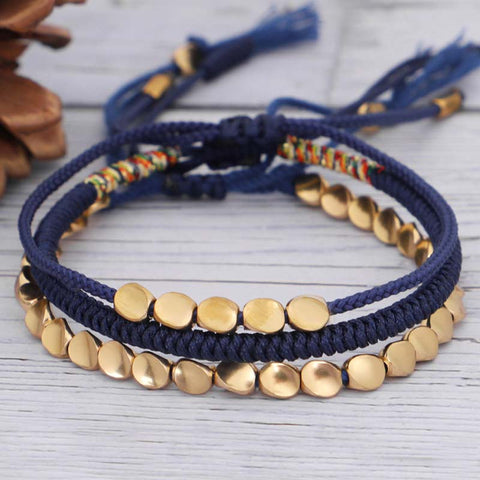
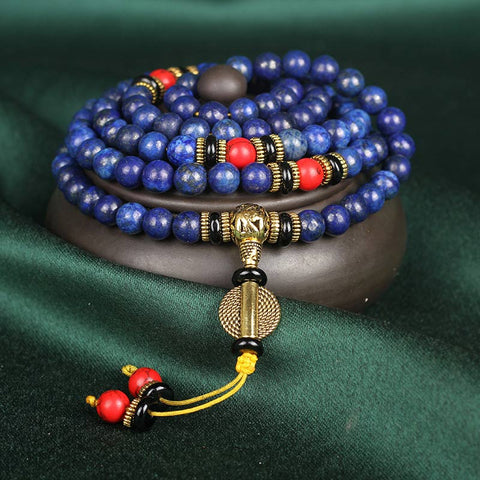
Likewise, a modern bracelet need not be a shortened prayer strand. Bead count and a central decorative bead do not automatically identify a practice. If religious use is important, seek instructions from the relevant tradition rather than treating every beaded object as interchangeable.
Read Material Names Literally
Ask for the identified metal and each prominent bead or inlay. Turquoise colour does not establish turquoise, and coral colour does not establish coral. Glass, resin, dyed materials, and other substitutes should be described accurately rather than hidden behind a regional style name.
Clarify whether a surface is plated, intentionally darkened, lacquered, or otherwise finished. A dark recess may be a design treatment rather than evidence of age. A worn appearance cannot establish that an object is antique or has passed through generations.
Where material identification changes the price substantially, ask what testing supports it and whether a report describes the exact object offered. A report for one component cannot automatically identify every inlay in a composite piece. Avoid destructive home tests such as scratching or heating.
Ask Where and How It Was Made
Separate the place of design, component production, and final assembly. A piece can draw on Tibetan imagery while being assembled elsewhere. That description can be honest if the distinction is clear. Geographic uncertainty should not be filled with an invented workshop story.
Ask which operations were performed by hand. Casting, soldering, engraving, stone setting, and assembly are separate stages. Handmade does not require every stage to avoid tools, but the seller should be able to explain what the term covers in their description.
Look at joins, inner surfaces, and attachments alongside the decorative front. Visible irregularity is not automatic proof of handwork or age. Uniformity is not automatic proof of poor workmanship. Evaluate the stated process and observable condition together.
Treat Provenance as an Evidence Trail
For an older piece, request the available ownership history, invoices, collection records, and relevant sale information. Provenance means a documented history, not simply a claim that an object came from a remote village. Gaps should remain visible.
For a new piece, a maker's name, workshop location, and dated receipt can establish useful information even without an elaborate history. Keep the product description at purchase because online wording can change. Match any certificate to photographs or identifying details of the item.
Claims of ethical sourcing or direct community support also need evidence. Ask who makes the piece, how the seller works with them, and what the particular claim means. A cultural motif alone does not demonstrate fair payment or traceable materials.
Choose a Wearable and Maintainable Piece
Check weight, edges, closures, and dimensions before buying an elaborate necklace or pendant. A historical object designed for a particular costume is not necessarily a comfortable model for daily wear. A modern adaptation should still have clear practical specifications.
Ask for care instructions covering all components. A container with textile or paper inside must not be treated as a plain metal shell. Do not immerse it or use cleaning chemicals near its opening without appropriate guidance.
Keep fragile inlays and projecting ornaments from striking other jewelry during storage. If a fitting loosens, obtain a repair assessment before continuing to wear it. Record what was repaired so future explanations do not present a replacement part as original.
Let Specificity Carry the Story
When describing a piece to someone else, distinguish the museum comparison, the seller's claim, and your own reason for wearing it. That makes the story more credible and avoids asking one ornament to represent an entire culture.
A good purchase may be a new style-inspired pendant with transparent materials rather than an uncertain antique. It may also be a carefully documented historical object requiring specialist care. Neither needs a universal promise of protection to deserve thoughtful attention.
Choose the level of cultural and material detail that matters to you, then ask for evidence at that level. Respect grows from accurate names, limited claims, and attention to the people and practices behind a particular object.
Factual References
Related Reading
- Tibetan Style Bracelets Buying Questions
- Tibetan Style Rings Inscriptions and Fit
- Jade Jewelry Materials and Forms
Frequently Asked Questions
Does One Museum Object Represent All Tibetan Jewelry
No. Its date, place, materials, owner, and use describe a specific object.
What Is a Gau
It is an amulet container. Its construction and contents need their own description.
Does Turquoise Colour Identify Turquoise
No. Ask for material identification and any disclosed treatment or imitation.
Does an Aged Finish Prove Antiquity
No. An intentionally aged surface is not a documented history.
What Supports an Ethical Sourcing Claim
Specific information about makers, supply relationships, and the scope of the claim, not the motif alone.
Can I Wash an Amulet Container
Do not assume so. Contents, joins, finishes, and any sacred context affect appropriate handling.